LACTOSE
INTOLERANCE

It is the most common enzymatic intolerance and is recognized as a food intolerance by the World Health Organization (WHO).

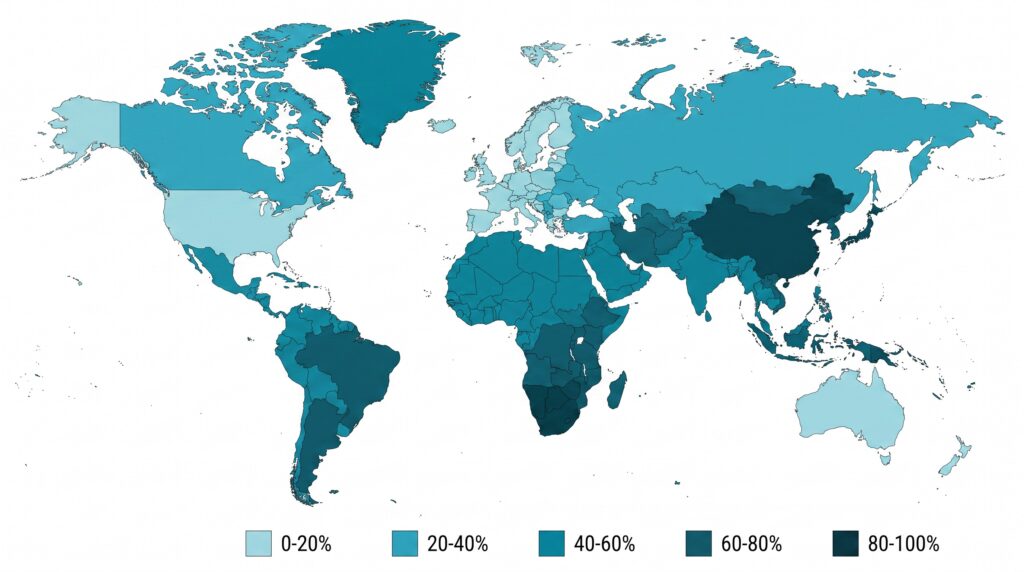
It is estimated that the enzyme lactase is deficient in more than half of the world’s population (approximately 70%), though this varies by ethnicity. There are no significant differences in incidence between males and females.

In Europe, for example, the situation varies considerably: in Southern Europe, about 70% of individuals exhibit this deficiency; in Central Europe, the figure is around 30%; whereas in Northern Europe, the incidence is significantly lower, standing at approximately 5%.

Storhaug CL et al. Country, regional, and global estimates for lactose malabsorption in adults: a systematic review and meta-analysis. The Lancet Gastroenterology & Hepatology, 2017

WHAT IS LACTOSE INTOLERANCE?

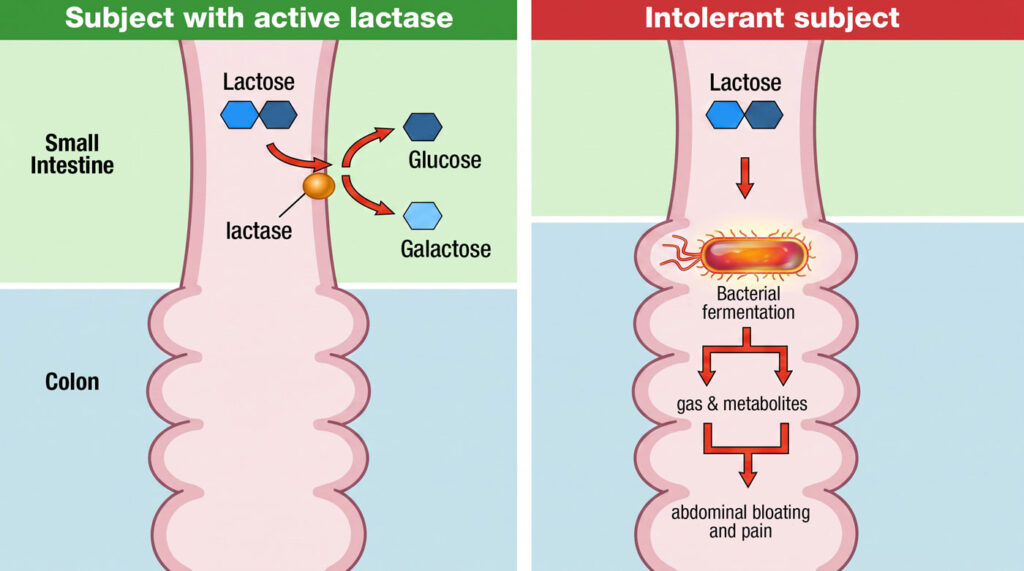
Lactose intolerance, also known as hypolactasia, occurs due to a partial or total lack of lactase—the enzyme capable of breaking down lactose into its two simple sugars: glucose and galactose.

FORMS OF LACTOSE INTOLERANCE

Primary adult-type hypolactasia (primary lactose intolerance): A late-onset phenotype characterized by a progressive, genetically programmed down-regulation of lactase-phlorizin hydrolase (LPH) expression. Clinical severity exhibits high interindividual variability depending on residual enzymatic activity and gut microbiota composition. This condition is irreversible and progressively worsening due to the continuous decline in lactase synthesis. It represents the most prevalent form of lactase deficiency globally.”

Secondary lactose intolerance (secondary hypolactasia): This phenotype is induced by acute or chronic gastrointestinal pathologies that damage the intestinal mucosa:

  • Intestinal infections
  • Celiac disease
  • Crohn’s disease
  • Irritable bowel syndrome (IBS)

It is typically transient and resolves upon mucosal healing or eradication of the underlying etiology.”

Congenital lactose intolerance (congenital lactase deficiency): An autosomal recessive disorder caused by a genetic mutation that renders the neonate incapable of hydrolyzing lactose from birth. It is an extremely rare clinical condition.”

SYMPTOMS

– Abdominal pain and cramps

– Flatulence

– Bloating

– Diarrhea

– Nausea

– Fatigue

– Skin rashes

The signs and symptoms of lactose intolerance appear between 30 minutes and 1–2 hours after consuming dairy products. The severity of symptoms depends on the amount of lactose ingested, residual lactase activity, and the transit time through the small intestine.

WHAT HAPPENS IN THE INTESTINE

Lactase is an enzyme located on the microvilli of the small intestine’s brush border, specifically in the duodenum and jejunum.

Lactase deficiency results in the presence of undigested and unabsorbed lactose within the intestinal lumen.

Unabsorbed lactose draws water into the intestinal lumen via an osmotic effect, causing osmotic diarrhea.

In the colon, residual lactose is fermented by the gut microbiota, producing gas (hydrogen, carbon dioxide, and methane) and metabolites derived from its breakdown into monosaccharides. These processes further increase fluid content within the intestinal lumen.

The combination of these pathophysiological mechanisms is responsible for the onset of the typical abdominal signs and symptoms associated with lactose intolerance.

What happens in the intolerance is persistent or neglectednot managed?

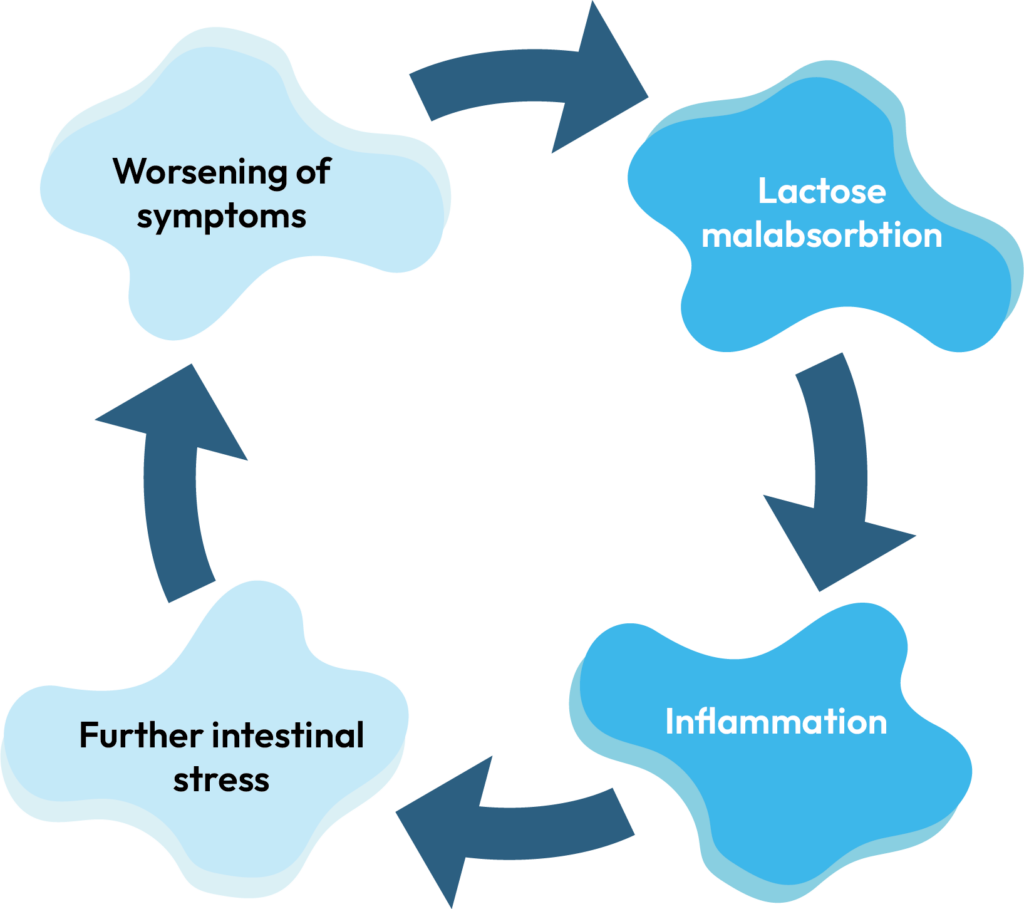
Se l’intolleranza è continua o trascurata, la fermentazione può alterare la flora batterica (disbiosi) e indebolire la barriera intestinale ( LEAKY GUT), innescando uno stato infiammatorio cronico.

INTESTINAL ALTERATIONS: Leaky Gut Syndrome

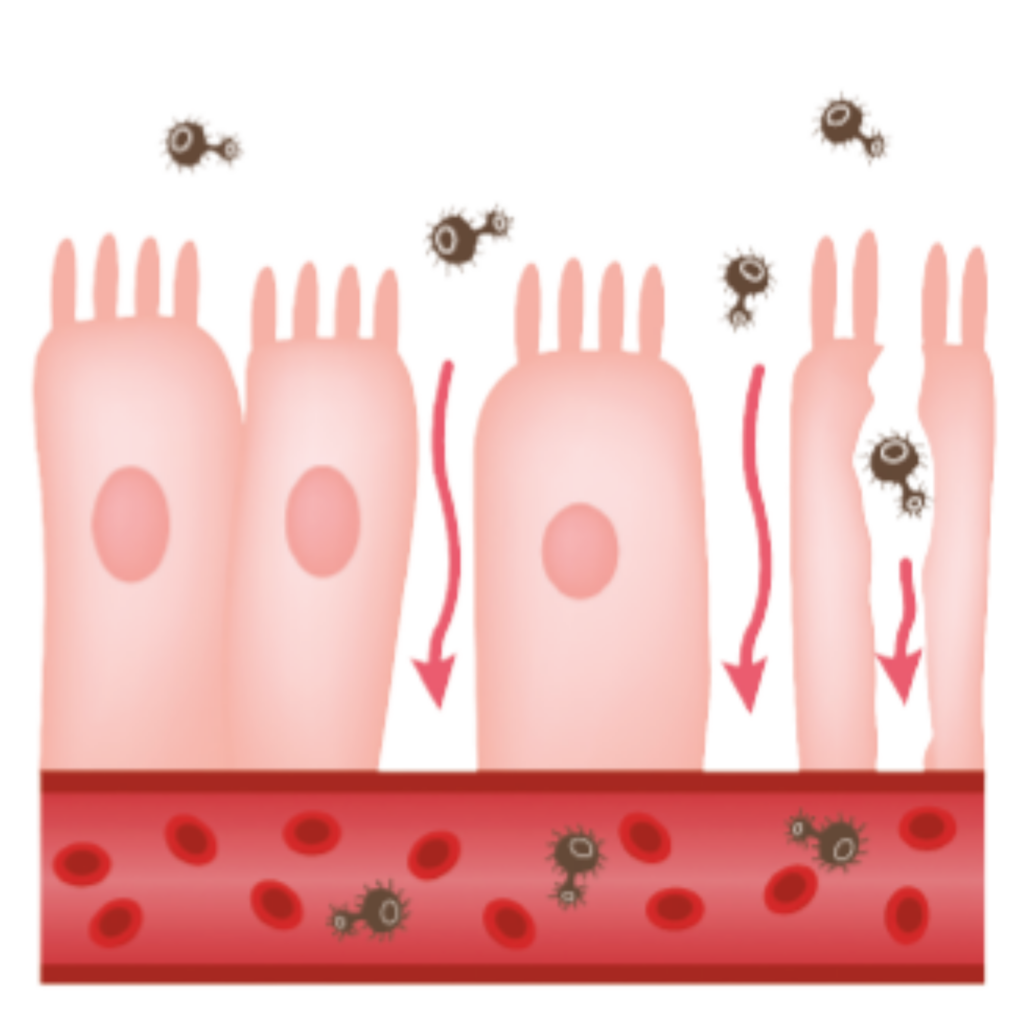
The loss of intestinal barrier integrity is caused by the weakening of intercellular junctions (tight junctions), resulting in increased intestinal mucosal permeability to the passage of molecules and partially digested food.

This alteration, known as increased intestinal permeability or “leaky gut syndrome” (LGS), is associated with a state of low-grade chronic inflammation, which can contribute to the persistence and progression of various gastrointestinal disorders.

Intestino normale 

Intestino infiammato

Duolacton® and Lactobromin® are registered trademarks – reproduction, even partial, of texts, graphics and content is prohibited.

S.S.I. PHARMA S.r.l. – VAT Number 03510660248
Credits: OFP Copyright S.S.I. PHARMA S.r.l. 2026 – any form of reproduction is prohibited.

S.S.I. Pharma srl – Via Colomba, 71
36061 Bassano del Grappa (VI) – Veneto, Italy
+39 340 5232 592
info@ssipharma.com